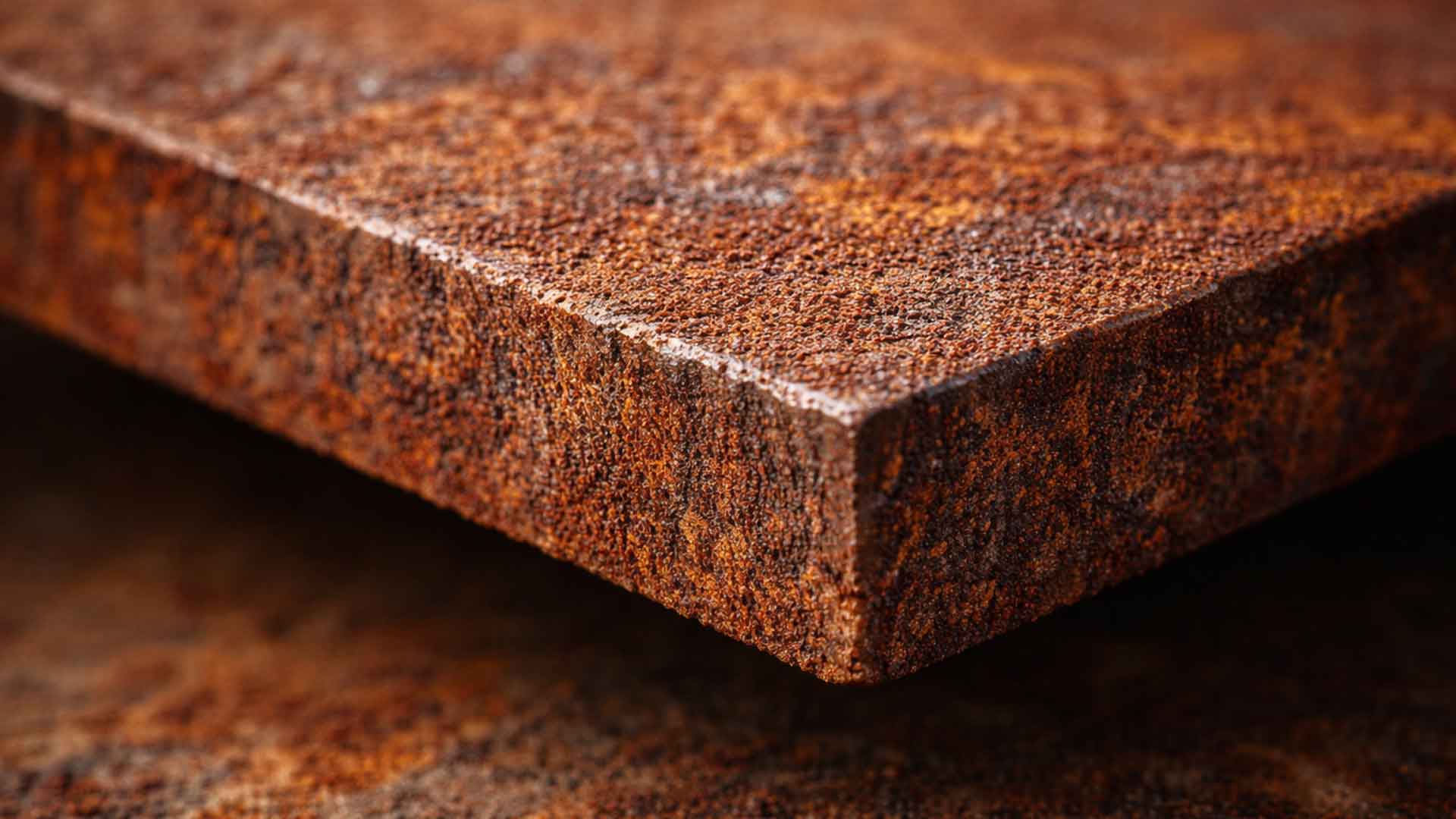
Recognizing Quality in Rusted Metal: Why Quality Makes All the Difference
In the market for garden decorations, one encounters an enormous price range for noble rust (Corten steel) objects. For the observer, the question often arises: Why do these differences exist, and how can the value of an object be measured?
Those who choose noble rust opt for a material that thrives on its transformation. However, for this process to remain aesthetically pleasing over the years, the technical conditions must be right. In this article, we shed light on the qualitative differences beyond just the appearance.
Table of Contents
- Material Thickness: The Basis for Durability
- The Oxidation Process: Quick Rust vs. Natural Patina
- Workmanship: Edges, Welds, and Details
- Origin and Transparency: An Ecological Factor
- Price vs. Value: A Long-Term Calculation
- Conclusion: What to Look for When Buying
1. Material Thickness: The Basis for Durability
The most important quality feature is the thickness of the steel used. While inexpensive imports often use thin sheets, we rely on material thicknesses that can permanently withstand the corrosion process.
- The physical limit: Rust is oxidation that erodes material. A wafer-thin sheet can become unstable or rust through after a few years in unfavorable weather conditions.
- Patina stability: Solid steel provides enough substance for a dense barrier layer to form without compromising the structural integrity of the object.
2. The Oxidation Process: Quick Rust vs. Natural Patina
A high-quality noble rust object is characterized by a controlled initiation of the rusting process.
- Industrial rapid procedures: Cheap metals are often treated with aggressive acids to force an orange surface in the shortest possible time. This layer is often unstable, flakes off quickly, and stains extremely easily.
- Natural maturation: High-quality workpieces undergo a process where the mill scale is professionally removed before oxidation begins. The result is a fine-grained, deep brown patina that becomes increasingly firm and beautiful over time.
3. Workmanship: Edges, Welds, and Details
Quality often reveals itself in the details of manufacturing.
- Precision: High-quality objects are usually manufactured using laser cutting, which ensures clean, burr-free edges.
- Welding: In cheap products, welds are often visible or poorly executed, which can lead to weak points under the rust layer. Professionally executed welds, however, visually blend with the patina and offer lasting stability.
4. Origin and Transparency: An Ecological Factor
At vintage-one.de, we believe that a garden object radiating naturalness should also be created under fair and ecological conditions.
- Transparency: Production in local workshops allows for seamless quality control.
- Logistics: Short transport routes save CO2 and prevent the patina from reacting uncontrolled during long overseas transports.
5. Price vs. Value: A Long-Term Calculation
An inexpensive object that needs to be replaced after three years is ultimately more expensive than a valuable piece that remains in the garden for decades. High-quality noble rust is not a disposable product, but an investment in the aesthetics of your outdoor space.
6. Conclusion: What to Look for When Buying
Quality in noble rust is palpable. Pay attention to the weight (an indicator of material thickness), the uniformity of the surface, and clean workmanship. A reputable provider will provide information about steel quality and origin.
Our Recommendation
If you value durability and an elegant appearance, it's worth looking beyond just the rust color. We invite you to see the solid workmanship of our noble rust collection for yourself. We would be happy to advise you personally on material thicknesses.